Tearing out an old deck feels satisfying until the boards start piling up. One minute you are pulling up a few weathered planks, and the next your yard looks like a mini construction site. Between railings, joists, stairs, posts, fasteners, and hidden framing, deck removal and cleanup can create more debris than most homeowners expect.
So, what size dumpster do you need for an old deck? The answer depends on the size of your deck, the type of materials, how much of the structure you are removing, and whether you are disposing of only wood or heavier materials as well. This guide from McCoys Dumpsters breaks it down in a practical way so you can plan your cleanup without overpaying or running out of space.
Why Deck Removal Creates So Much Debris
Decks are built in layers. Even a simple backyard platform may include:
- Surface deck boards
- Support joists
- Beams and blocking
- Railing sections
- Stair stringers and treads
- Concrete footings or post bases
- Hardware, nails, screws, and brackets
That means the debris generated is not always easy to stack neatly. Long boards, splintered wood, and bulky railing sections take up space fast. Treated lumber can also be heavier than expected, especially if it has been exposed to years of rain, snow, and moisture.
This is why choosing the right dumpster size matters. A dumpster that looks large enough at first glance can fill quickly once you start loading irregular deck materials.
Quick Answer: Common Dumpster Sizes for Deck Projects
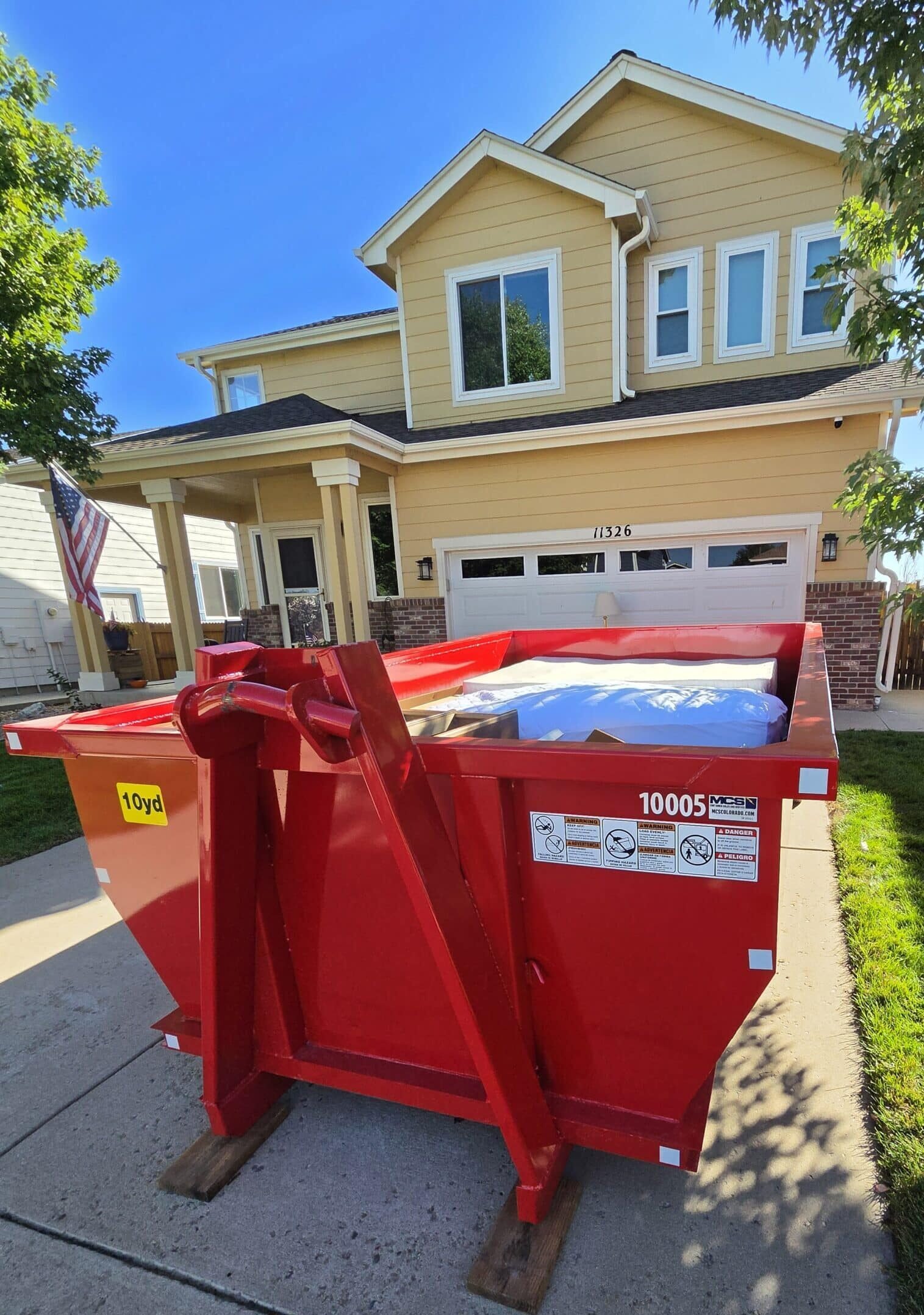
For most deck projects, consider these options: Use a 10-yard dumpster for a small deck or partial removal. This size is best when your deck is about 100–200 square feet, has minimal framing, or you’re only removing surface boards.
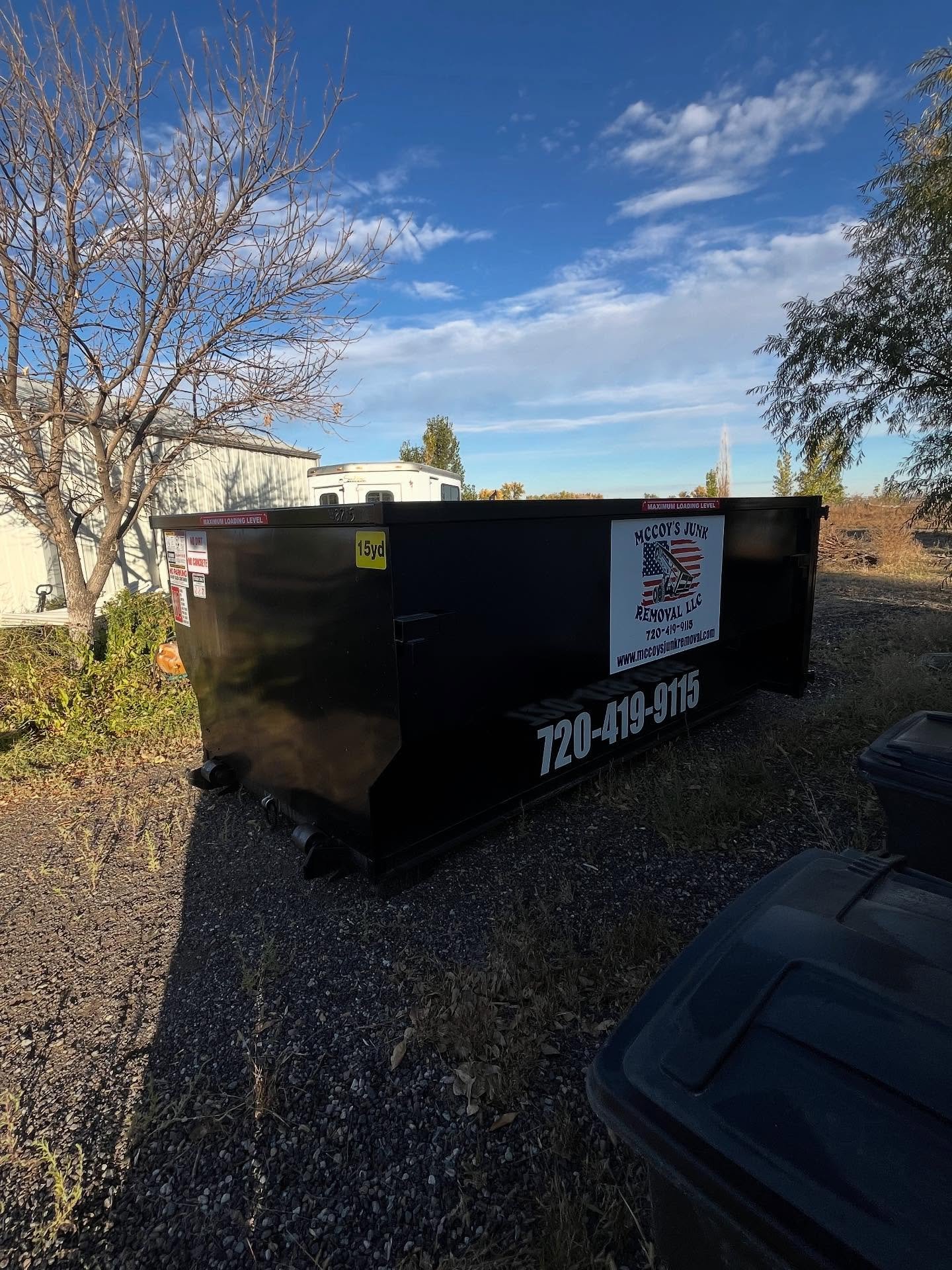
Use a 20-yard dumpster for a medium-sized deck or full removal of a typical backyard deck. It’s often the safer choice if you’re tearing out the entire structure, including framing, stairs, railings, or built-in features.
A good rule of thumb is this: if you are removing only a small section of decking, a 10-yard dumpster may be enough. If you are tearing out the entire structure or dealing with extra debris, a 20-yard dumpster is usually the better option.
10-Yard Dumpster: Best for Small Deck Removal
A 10-yard dumpster is often a good fit for smaller deck removal cleanup. It typically works well for decks around 100 to 200 square feet, depending on how the material is cut and loaded.
This size may be right if:
- You are removing a small deck, landing, or porch platform
- The deck is mostly surface boards with limited framing
- You can cut boards down to fit more efficiently
- You are not removing large amounts of concrete, soil, or other heavy debris
A 10-yard dumpster is also useful when driveway space is limited. It is compact, easier to place, and still large enough for many smaller home improvement cleanups.
The main risk is underestimating the framing. If you plan to remove joists, beams, stairs, and railings along with the surface boards, the debris pile may grow beyond what a 10-yard dumpster can comfortably hold.
20-Yard Dumpster: The Most Practical Choice for Many Old Decks
For many homeowners, a 20-yard dumpster is the sweet spot. It provides enough room for a full deck tear-out without requiring the largest option.
A 20-yard dumpster is often a good match for medium-sized decks, roughly 200 to 400 square feet. It can usually handle deck boards, framing lumber, railings, stairs, and miscellaneous construction waste from the project.
Choose a 20-yard dumpster if:
- You are removing an entire backyard deck
- The deck has railing, stairs, or multiple sections
- You want extra space so debris is easier to load
- You are unsure how much waste the deck will produce
This size is especially helpful because deck debris is bulky, not just heavy. Long boards and railing pieces leave gaps unless they are cut down. Having extra cubic yards gives you more room to work and reduces the chance of overfilling.
For more general guidance on matching project size to dumpster capacity, McCoys has a helpful guide on how to choose the right dumpster size.
How to Estimate Deck Debris Before Renting
You do not need a perfect calculation, but a rough estimate helps. Start by measuring the deck’s length and width to get the square feet. Then think beyond the top boards.
Ask yourself:
- Are you removing the entire frame or only the surface boards?
- Does the deck have stairs?
- Are there railings around the whole structure?
- Is the wood wet, rotted, or unusually heavy?
- Will you also remove concrete footings or landscaping debris?
A flat 12-by-12 deck is 144 square feet, but the cleanup may include far more than 144 square feet of boards. Framing underneath can double the amount of material. Railings and stairs can add even more bulk.
Watch Out for Weight Limits and Prohibited Materials
Deck removal cleanup is not only about volume. Weight matters too. Treated wood, composite boards, and heavier materials can add up, especially when they are damp. Concrete footings, brick, stone, or soil may need special handling because they are much heavier than lumber.
Before loading the dumpster, check what materials are allowed. Nails and screws in boards are usually expected with demolition debris, but hazardous materials, chemicals, paints, and certain treated products may have restrictions. When in doubt, ask before tossing it in.
Once you know your debris needs, consider whether you prefer a dumpster rental or a full-service junk removal option.
Some homeowners want to handle demolition themselves and simply need a dumpster rental. Others would rather skip the hauling, lifting, and cleanup altogether. If the deck is already torn down, a dumpster can be the easiest option. If you need help removing bulky debris or clearing the area, professional junk removal services may be a better fit.
Think about your timeline, physical labor, driveway space, and how comfortable you are cutting and loading old deck boards. The right choice is the one that keeps the project safe, clean, and manageable.
Final Recommendation: Size Up if You Are Unsure
For a small deck, a 10-yard dumpster may do the job. For a typical full deck removal, a 20-yard dumpster is often the most practical choice.
The best dumpster size depends on the size of your deck, what you are removing, and how bulky the debris will be once it comes apart. If you are between two sizes, sizing up can prevent overfilled loads, extra trips, and project delays.
A clean deck removal starts with a good plan. With the right dumpster in place, you can tear out the old structure, clear the mess, and get your outdoor space ready for what comes next.