If you’re planning to rent a dumpster in Longmont, one of the first questions that comes up is whether a permit is required. The answer depends largely on where the dumpster will be placed and how long it will remain there.
Understanding local guidelines before delivery helps you avoid fines, project delays, or last-minute relocation of the container. Here’s what homeowners and contractors should know before scheduling a roll-off dumpster in Longmont.
When a Dumpster Permit Is Typically Required in Longmont
In most cases, you do not need a permit if the dumpster is placed entirely on private property — such as a driveway or construction site that you control.
However, a permit is generally required if the dumpster will:
Be placed on a public street
Occupy a sidewalk
Block a public alley
Sit in a public right-of-way
The City of Longmont regulates the use of public spaces for safety, traffic flow, and emergency access. Any obstruction in these areas usually falls under right-of-way permitting requirements.
If your driveway is too small or inaccessible and street placement is your only option, you should contact the City of Longmont Public Works or Engineering Department to confirm current rules and application procedures.
Dumpster Placement on Your Driveway: The Easiest Option
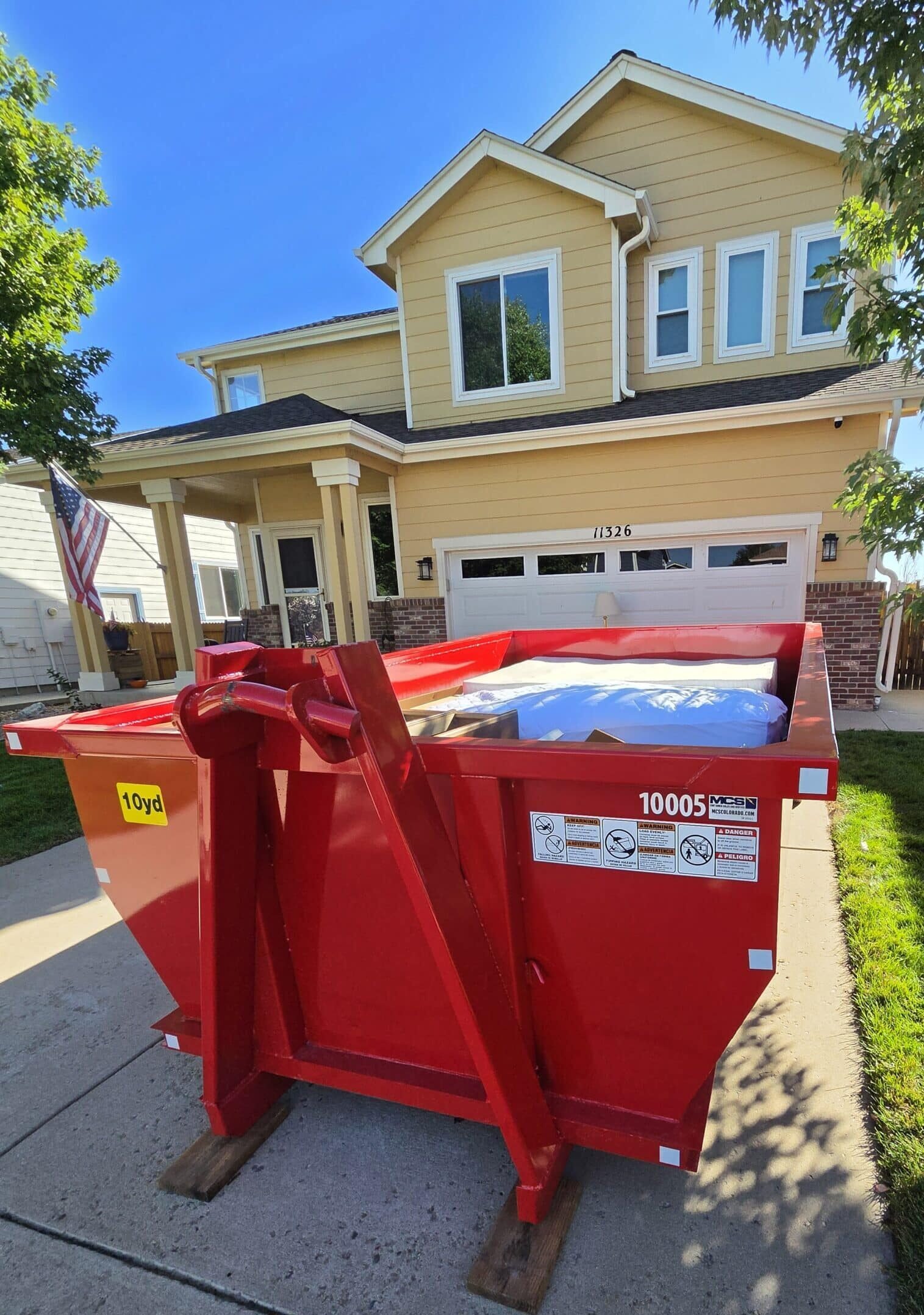
For most residential projects, placing the dumpster on your driveway eliminates the need for a city permit.
That said, you should still consider:
Weight of the loaded container
Potential surface damage
HOA guidelines (if applicable)
Clearance for vehicles and garage access
Some homeowners associations in Longmont neighborhoods may have their own temporary placement restrictions, even if the city does not require a permit. Always review HOA covenants before delivery.
To protect your driveway, many customers use plywood boards beneath the dumpster wheels to distribute weight and reduce the risk of surface cracking.
What About Construction Projects?
Contractors working on larger builds or remodels often face different placement realities. If the job site lacks sufficient on-site space, street placement becomes necessary — and that’s when permits usually enter the picture.
Commercial or multi-unit residential projects may also have additional requirements, including:
Traffic control plans
Reflective markings or barricades
Defined placement durations
Liability insurance documentation
If you’re managing a construction project, it’s wise to coordinate permit details well before the dumpster is scheduled for delivery. Delays in approval can push back demolition or debris removal timelines.
How Long Can a Dumpster Stay Without a Permit?
When placed on private property, rental duration is generally governed by your agreement with the dumpster provider rather than the city.
If placed in the public right-of-way with a permit, there may be limits on:
Number of consecutive days allowed
Required renewals
Inspection requirements
Safety visibility standards
City rules can change, so confirming timelines during the planning phase prevents compliance issues.
Common Permit Misconceptions
Several misunderstandings often cause confusion for Longmont residents:
“The dumpster company handles the permit automatically.”
Some providers may assist, but not all do. Responsibility for securing a right-of-way permit often falls on the renter or contractor. Always clarify this before booking.
“Short rentals don’t need permits.”
Even a one-day placement on a public street typically requires approval.
“Residential jobs are exempt.”
The requirement isn’t about the type of project — it’s about whether public property is being used.
“If my neighbors do it, I can too.”
Enforcement can vary, but assuming a permit isn’t required based on someone else’s experience can be risky.
How to Apply for a Dumpster Permit in Longmont
If you determine that your dumpster must sit in the street or another public area, you’ll likely need to:
Contact the City of Longmont Public Works or Engineering Department.
Submit a right-of-way permit application.
Provide placement details (location, duration, size).
Pay any applicable permit fee.
Follow safety marking requirements if approved.
Always verify current procedures directly with the city to ensure accuracy.
Applying early is key. Permits are not always same-day approvals.
Tips to Avoid Permit Issues
If you want to simplify the process:
Measure your driveway carefully before ordering.
Consider temporarily relocating vehicles to free up space.
Schedule the dumpster for the shortest realistic timeframe.
Confirm with your rental provider whether they assist with permitting.
Contact the city directly if you’re unsure — clarity upfront prevents costly corrections later.
Planning placement in advance is far easier than relocating a loaded dumpster after delivery.
Final Takeaway
Whether you need a permit for a dumpster in Longmont depends almost entirely on placement. Private property usually does not require one. Public streets or sidewalks almost always do.
Before scheduling your rental, determine exactly where the container will sit and verify local rules. A quick call to the city can save time, prevent fines, and keep your project moving without interruption.
If you’re unsure about placement logistics, discussing your setup with your dumpster provider ahead of time can also help you choose the simplest, most compliant solution for your specific project.